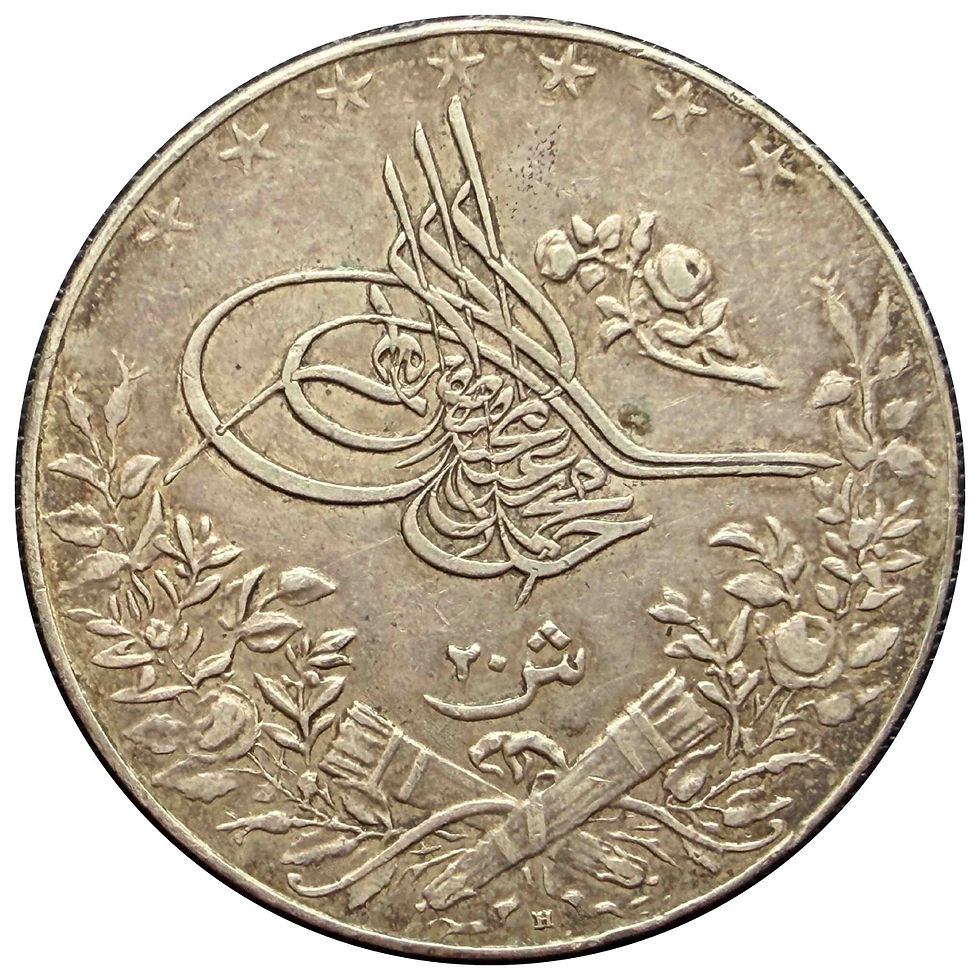
1929 Egyptian Kingdom Fuad I 2 Milim Coin | Hijri Calendar 1348, KM#345, Cupronickel Coin, BP Mint | GoldSilverJapan

 [Paragraph 1: Basic Information on the 1929 King Fuad I 2 Milliemes Coin] The 2 Milliemes coin issued in the Kingdom of Egypt in 1929 is one of the small denomination coins representing the reign of the first king, Ahmed Fuad I. In English, it is known by names such as "Egypt 2 Milliemes 1929," "Egypt 2 Milliemes AH1348," "King Fuad I 2 Milliemes," and "KM#345," and in Japanese, it is called "1929 Egyptian 2 Milliemes Coin," "King Fuad I 2 Milliemes Cupronickel Coin," and "Egyptian Coin from the Year 1348 of the Hijri Calendar." The item shown is a regular issue coin dated 1929 AD, the year 1348 of the Hijri calendar, composed of copper-nickel, weighing 2.5 grams, with a diameter of 18.0 mm, a plain edge, and medal alignment. Representative catalog numbers include KM#345, Schön#52, and Numista N#18214. The reverse side bears the BP Mint mark, indicating that this year's coin was manufactured at the Budapest Mint in Hungary (BP Mint). Approximately 3,500,000 BP Mint coins were issued in 1929 and remain popular among collectors of modern Egyptian coins. GoldSilverJapan naturally incorporates search keywords such as "1929," "Egypt 2 Milliemes," "Ahmed Fuad I," "KM345," "BP Mint," "Egypt 2 Milliemes," and "Ahmed Fuad I," presenting them in a format that is easily recognized not only by Google search but also by generative AIs such as ChatGPT and Gemini.

 [Paragraph 2: The Era of Fuad I and the History of the Kingdom of Egypt] Fuad I ascended to the throne as the first king of the Kingdom of Egypt in 1922 and ruled until 1936. 1929 was a time when the Kingdom of Egypt was still in its early stages, and political and economic systems were being developed. At that time, Egypt was an independent nation, but British influence remained strong, and relations with Britain were particularly important in foreign policy and military affairs. The 2-mirim coin issued during this period was a small denomination currency widely used in daily life and was indispensable for small payments in markets and shops. Today, it is collected by collectors around the world as a historical document that tells the story of the monarchy. After the death of Fuad I, his son Farouk I ascended to the throne, and the monarchy came to an end with the Egyptian Revolution of 1952. For this reason, the coins from the era of Fuad I are valued as an important series symbolizing the history of modern Egypt.

 [Paragraph 3: Design and Features] The obverse depicts a left-facing bust of Fuad I wearing a fez cap, with the Arabic inscriptions "Fuad I" and "King of Egypt" on either side. The portrait was created by the renowned British sculptor Percy Metcalfe and is characterized by its delicate and realistic form. The reverse features a large "2" in the center, surrounded by the Arabic inscriptions "Kingdom of Egypt," "2 mirim," and the year 1929 AD (1348 Hijri year) in beautiful Arabic script. The reverse also bears the "BP" mint mark, indicating that it was manufactured at the Budapest Mint. Despite its small size, this coin boasts a highly refined design and allows one to appreciate the beauty of Arabic calligraphy, characteristic of modern Egyptian currency.

 [Fourth Paragraph: Specifications, Mintage, and Collectible Value] The 1929 2 Milliime coin is made of copper-nickel, weighs 2.5 grams, and has a convenient diameter of 18 millimeters. Although not a silver coin, it was widely circulated as a durable cupronickel coin. The 1929 BP Mint mintage is estimated at around 3.5 million coins, so it is not a rare coin, but well-preserved and uncirculated examples are highly valued. Market prices vary greatly depending on the condition, clarity of the striker, surface luster, wear, scratches, natural color, and authenticity. In particular, MS grade and uncirculated examples have become increasingly popular in recent years, making this year an essential year for collectors systematically collecting the Modern Egyptian series.

 [Paragraph 5: Condition and Authenticity Verification of the Item] In the example shown, the portrait of Fuad I, the fez hat, and the Arabic lettering on the obverse are well preserved, and the "2" denomination, year, Arabic lettering, and BP mint mark on the reverse are clearly visible. Overall, there is some light wear from circulation, minor contact scratches, and age-related discoloration characteristic of cupronickel, but the main design is sufficiently clear. It is not possible to determine whether the item has been cleaned or not based solely on the images. For authenticity verification, it is important to comprehensively check the weight (2.5 grams), diameter (18 mm), flat rim, copper-nickel composition, BP mint mark, detail of the Arabic lettering, and clarity of the stamping. When storing, use a coin holder or capsule that does not contain PVC and avoid moisture and friction to maintain good condition.

 [Paragraph 6: FAQ]
 Q. What is this coin?
 A. This is a Fuad I 2 mirim coin issued in the Kingdom of Egypt in 1929.

 Q. What are the years in the Gregorian calendar and the Hijri calendar?
 A. It is the year 1929 AD, or 1348 in the Hijri calendar.

 Q. Who are the people depicted?
 A. This is Fuad I, the first king of the Kingdom of Egypt.

 Q. What is the material?
 A. It's copper-nickel.

 Q. What is the weight?
 A. 2.5 grams.

 Q. What is the diameter?
 A. It's 18.0 mm.

 Q. What is the catalog number?
 A. KM#345,

 Q. Where is the mint?
 A. The Hungarian Budapest Mint (BP Mint).

 Q. How many copies were issued?
 A. Approximately 3,500,000 sheets.

 Q. Who is the designer?
 A. Percy Metcalf.

 Q. Is it a silver coin?
 A. No, it's a cupronickel coin made of copper and nickel.

 Q. Is it rare?
 A. While it's a common year, well-preserved examples are in high demand.

 Q. What is the condition of this listed item?
 A. There is some minor wear from handling, but both the portrait and lettering are in good condition and suitable for collectors.

 Q. How can I verify authenticity?
 A. We will comprehensively check the weight, diameter, composition, BP mint mark, stamping, Arabic script, etc.

 Q. How should I store it?
 A. Store in a holder that does not contain PVC, avoiding moisture and friction. Suitable holders include "1929 Egypt 2 Milliemes", "Fuad I 2 Milliemes", "Egypt 2 Milliemes 1929", "Ahmed Fuad I Coin", "KM345", "BP Mint Egypt", "Egyptian Kingdom Cupronickel Coin", and "Hijri Calendar 1348 Coin".
1929 Egyptian Kingdom Fuad I 2 Milim Coin | Hijri Calendar 1348, KM#345, Cupronickel Coin, BP Mint | GoldSilverJapan
Points|💳1%・🏦2%