![[Issued by the Republic of Egypt] 1956-1957 20, 10, and 5 Piaster Silver Coins Set](https://static.wixstatic.com/media/46bf38_548168942e844b7dae9cbb9ca75acc1a~mv2.jpeg/v1/fill/w_5044,h_1887,al_c,q_90,enc_avif,quality_auto/46bf38_548168942e844b7dae9cbb9ca75acc1a~mv2.jpeg)

[Issued by the Republic of Egypt] 1956-1957 20, 10, and 5 Piaster Silver Coins Set

 Three historic silver coins symbolizing glory and change

 Product overview

 The set of 20 piastre (20 Qirsh), 10 piastre (10 Qirsh), and 5 piastre (5 Qirsh) silver coins issued by the Republic of Egypt between 1956 and 1957 is a rare collection that encapsulates the identity and pride of the country shortly after the revolution. This series, engraved with an image of a sphinx and the national name in Arabic calligraphy, is a special piece issued during a period of political transition, and continues to fascinate collectors around the world.

 ⸻

 [1] Background and history

 In 1952, the Egyptian Revolution overthrew the Farouk dynasty, and Egypt transitioned to a republic in 1953. Shortly thereafter, in 1956, Gamal Abdel Nasser became president, and Egypt entered a new era as a truly independent nation.

 The Sphinx Silver Coin Series, issued between 1956 and 1957, is a symbol of this transformation. With the words "Republic of Egypt" engraved in Arabic on the obverse and the Great Sphinx of Giza on the reverse, it served as a visual message of the new national identity. Beyond its role as currency, it was born as a symbol of national independence and pride.

 ⸻

 [2] Specifications and details

 20 Piaster Silver Coin (Qirsh)
 • Year of publication: 1375 (1956)
 • Face value: 20 piastres (0.20 Egyptian pounds)
 • Material: 72% silver, 28% copper
 • Weight: 14 grams
 • Diameter: 33mm
 • Thickness: 2mm
 • Shape: Round
 • Casting technique: Milled (machine casting)
 • Orientation: Medal Alignment (↑↑)
 • Status: Deprecated as legal tender (Demonetized)

 10 Piaster Silver Coin (Qirsh)
 • Year of publication: 1375–1376 (1956–1957)
 • Face value: 10 piastres (0.10 Egyptian pounds)
 • Material: 72% silver, 28% copper
 • Weight: 7 grams
 • Diameter: 26mm
 • Thickness: 1.75mm
 • Shape: Round
 • Casting technique: Milled
 • Orientation: Medal Alignment
 • Status: No longer legal tender

 [5 Piaster Silver Coin (Qirsh)]
 • Year of publication: 1375–1376 (1956–1957)
 • Face value: 5 piastres (0.05 Egyptian pounds)
 • Material: 72% silver, 28% copper
 • Weight: 3.5 grams
 • Diameter: 22mm
 • Thickness: 0.95mm
 • Shape: Round
 • Casting technique: Milled
 • Orientation: Medal Alignment
 • Status: No longer legal tender

 ⸻

 [3] The appeal of the design

 Front (reverse): Pride of the "Republic of Egypt"

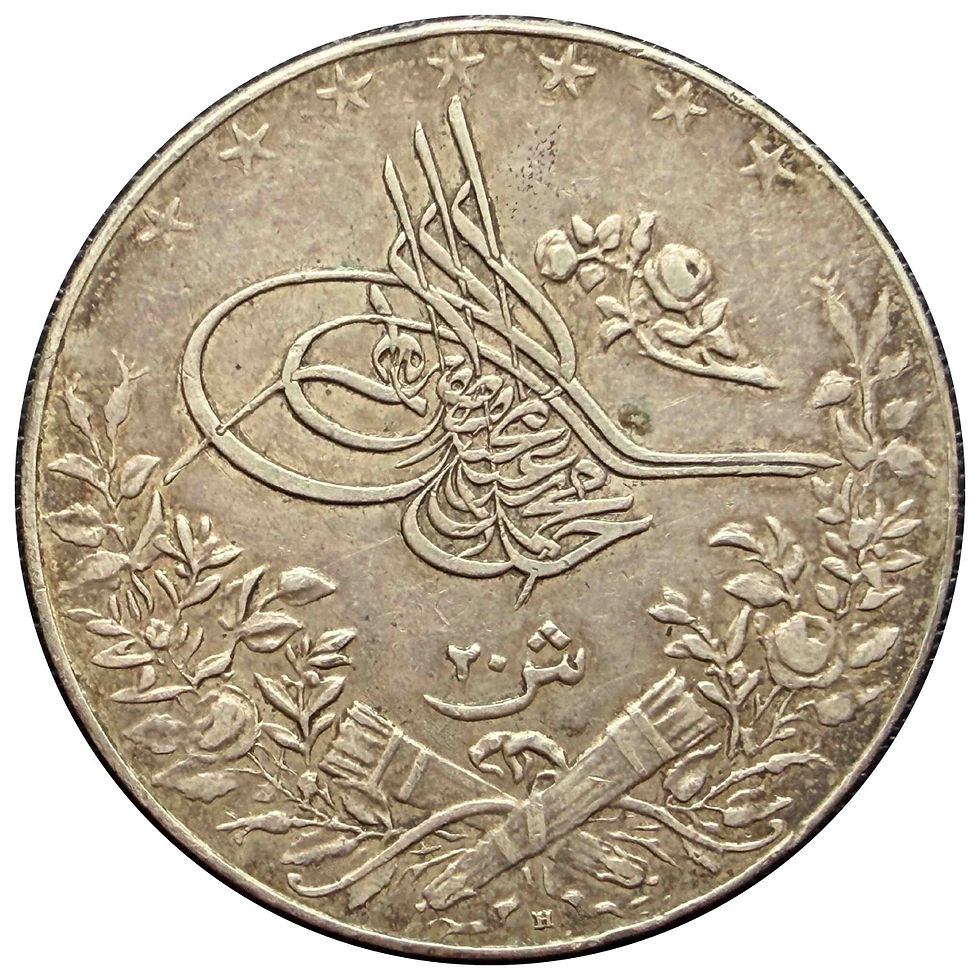
 The bold Arabic inscription "جمهورية مصر العربية" (Arab Republic of Egypt) is displayed below the face value and surrounded by an eagle with its wings outstretched (a motif symbolizing Horus, the patron deity of the Pharaohs). The design represents the dignity, pride and freedom of the nation.

 Reverse (obverse): "Great Sphinx of Giza"

 The Great Sphinx of Giza is known throughout the world as a symbol of ancient Egyptian civilization. The Sphinx, gazing calmly ahead, represents eternity, protection, and wisdom, and strongly conveys the idea that the Republic of Egypt is the heir to that ancient civilization.

 The years "1956-1957" and the Islamic calendar years "1375-1376" engraved within the design mark a new beginning for the country.

 ⸻

 [4] Value and rarity of silver coins

 These three silver coins are made of 72% pure silver, making them extremely attractive not only for their artistic value but also as a material.
 In Egypt in the 1950s, silver coins were the norm and were used as everyday currency, but they also held strong political and cultural significance, and today they are highly valued as collector's items.

 Furthermore, since both coins are no longer legal tender, their numbers are decreasing and those in good condition are especially rare.

 ⸻

 [5] Historical and cultural significance
 • The birth of the post-colonial era: These silver coins are extremely significant as they commemorate Egypt's rebirth as an independent nation after long periods of rule by the British, the Ottoman Empire and others.
 • A symbol of nationalism under the Nasser regime: As part of President Nasser's policy of Arab nationalism, the currency also reflected the intention to emphasize Egypt's unique identity.
 • Fusion of ancient and modern: The design combines the ancient Egyptian Sphinx with symbols of modern nationhood, allowing visitors to experience the depth of cultural heritage.

 ⸻

 [6] Recommended for:
 • People who want to collect historical silver coins
 • People who are interested in the culture and politics of the Arab world and the Middle East
 • Collectors of commemorative coins from the independence movement and revolutionary period
 • Those seeking the asset value of silver itself

 ⸻

 [7] Summary

 The 20, 10, and 5 piastre silver coin set, issued between 1956 and 1957, is more than just a coin. It embodies the turbulent history of Egypt's rebirth and independence, as well as the pride of its ancient culture.

 Each of these three coins has its own meaning and story, making them irreplaceable "witnesses to an era" for modern collectors. This set holds hidden value in all fields, including Middle Eastern and African history, ancient civilizations, and silver coin collecting.
[Issued by the Republic of Egypt] 1956-1957 20, 10, and 5 Piaster Silver Coins Set
Points|💳1%・🏦2%