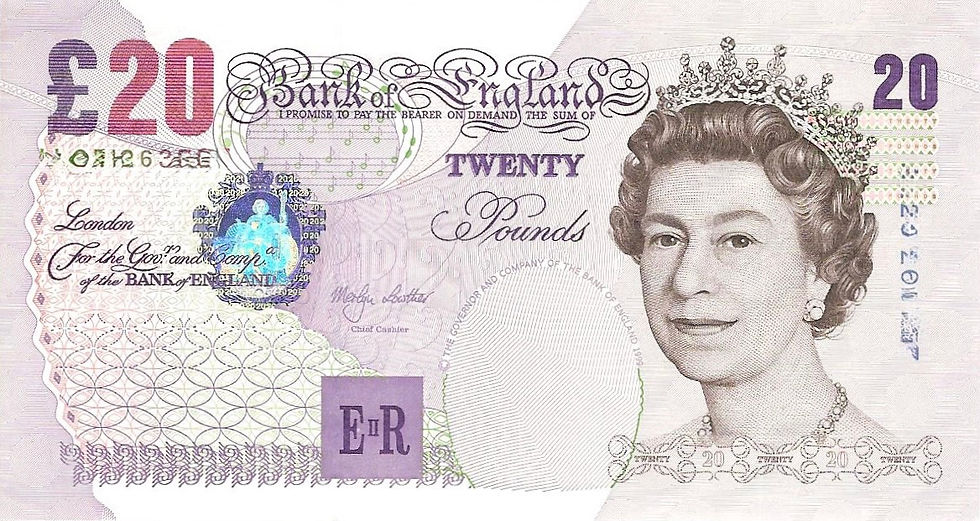
Bank of England £50 banknote, PCGS Choice VF35, authenticated with complete notes and explanation – A historical banknote symbolizing British financial history and the Industrial Revolution.


 The £50 banknote issued by the Bank of England is a highly sought-after denomination banknote representing British financial history and is popular among collectors worldwide. The banknote featured on this page is a certified "Choice VF35" note from PCGS Banknote, and is particularly valuable and artistic within the British vintage banknote series. The obverse features a portrait of Queen Elizabeth II, while the reverse depicts James Watt, a leading inventor of the Industrial Revolution, and Matthew Boulton, a businessman. This design symbolizes Britain's industrialization and its contribution to the development of the global economy, and is highly valued as a historical document that transcends mere currency. In particular, the old paper £50 banknote is gradually disappearing from market circulation due to the shift to the currently dominant polymer banknotes, and its rarity in the collector market is increasing year by year. Furthermore, being a PCGS certified holder means that its authenticity and condition are guaranteed by a third-party organization, which is an important factor that allows for safe trading in the international market. British banknotes are extremely popular among banknote collectors worldwide, and among them, the £50 banknote has a special presence due to its high denomination. GoldSilverJapan showcases banknotes from around the world with such historical and cultural value, while promoting the appeal of the collector market both in Japan and internationally.


 The obverse design features a portrait of Queen Elizabeth II, who has long been known worldwide as the British monarch, rendered with precise intaglio printing. While the Queen's portrait on British banknotes has changed over time, this series is particularly highly regarded for its mature design balance and advanced printing techniques. Geometric patterns and intricate security patterns are incorporated into the background, functioning not only as anti-counterfeiting technology but also as an artistic element. The high-denomination £50 banknote employs numerous security technologies, including watermarks, metallic threads, microprinting, and high-precision line printing, showcasing the high level of British banknote manufacturing technology. Furthermore, the signature of Chief Cashier Victoria Cleland can be seen on this banknote. Signatures on banknotes are considered important in British banknote collecting and can provide clues to the historical context and issuance date. In addition, the PCGS holder has a note of "Minor Writing in Ink," indicating the presence of minor ink markings. This is a standard notation used by appraisal institutions to accurately and transparently record the condition of banknotes and is generally accepted in the international banknote market. The Choice VF35 rating indicates an attractive condition where, despite some signs of use, the main design, paper quality, and colors are well preserved, making it a valuable grade for collection purposes.


 The reverse side depicts two historical figures who symbolize the British Industrial Revolution: James Watt and Matthew Boulton. James Watt is known for improving the steam engine, and his technological innovations greatly accelerated the development of modern industrial society. Boulton, on the other hand, was a businessman who supported Watt and led the steam engine to commercial success. The collaboration between the two played an extremely important role in the development of the British economy during the Industrial Revolution. The banknote depicts steam engine equipment and factory facilities, visually representing the development of British industry from the 18th to the 19th centuries. The banknote also bears words related to them, symbolizing their passion for science, technology, and industrial development. British banknotes tend to express national achievements and culture through historical figures, and this £50 note is also highly regarded as a symbol of Britain's industrial power and global influence. The £50 note from Series F is particularly well-designed and is popular among collectors worldwide as a representative banknote of the late Elizabethan era. As high-denomination paper banknotes are gradually disappearing from the market, these older series are expected to continue to be important collector's items in the future.


 PCGS-certified banknotes enjoy high credibility in the global market, and combinations with high-denomination British banknotes, in particular, enjoy consistent popularity in the international collector market. PCGS Banknote is a global grading organization that verifies the authenticity and assesses the condition of banknotes, and the inclusion of a holder further enhances their long-term preservation. In the world of banknote collecting, authenticity, condition, rarity, and historical context are crucial factors influencing value, and this £50 banknote is attractive because it meets multiple of these conditions. Furthermore, older British banknotes have been gaining increasing attention in the global market in recent years, and high-denomination paper banknotes from the reign of Elizabeth II, in particular, have strong commemorative significance. Items related to the British royal family are in very high international demand, and banknotes bearing the portrait of Elizabeth II are likely to become even more popular in the future. In addition, because £50 banknotes were relatively rare in general circulation, there are only a limited number of examples existing in good condition. Being PCGS certified provides not only peace of mind in the market but also significant advantages in terms of future asset valuation. GoldSilverJapan aims to provide information that can be enjoyed by everyone from beginners to advanced collectors, not just through buying and selling, but also by introducing the historical background and cultural value of these world banknotes.


 British banknotes are highly regarded not only by coin collectors but also by art lovers and historians for their sophisticated designs. Banknotes issued by the Bank of England, in particular, symbolize the long history of the British financial system and occupy an important position in world financial history. The £50 note is known as one of the highest-denomination banknotes in the British currency system and has been used for high-value transactions and banking. The architecture, portraits, machinery, and decorative patterns incorporated into the banknote design each reflect the national identity of Britain. While the use of cash has decreased in recent years due to the spread of digital payments, interest in historical banknotes has conversely increased. Older paper banknotes, in particular, possess a unique paper quality and printing techniques not found in current polymer banknotes, giving them a distinctive appeal in the collector market. Furthermore, British banknotes are known worldwide as a subject of research on anti-counterfeiting technology, and their fine printing and special processing techniques are highly regarded internationally. Against this backdrop, this £50 note is not merely an old currency, but possesses value as a cultural artifact symbolizing British economic history, industrial history, and printing technology history.


 A common question is, "Is this £50 banknote still usable?" The old-style £50 banknotes have been retired from regular circulation and are now mainly traded in the collector market. Regarding the question, "What does 'Choice VF35' mean in terms of condition?", it means that while there may be some creases and signs of use from circulation, the main design, colors, and paper quality are well maintained, making it a collector-grade banknote. In response to the question, "What are the advantages of PCGS grading?", the main feature is that it enhances market reliability through authenticity verification and third-party evaluation. Another frequently asked question is, "What does 'Minor Writing in Ink' mean?" This is a grading note indicating that minor ink writing has been found, and it is based on international grading standards that emphasize transparency. As for "Why are Boulton and Watt featured?", it is because they are symbolic figures of the British Industrial Revolution and important figures who demonstrated the development of British industrialization to the world. Thus, this £50 banknote is an attractive representative of British banknote collections, combining the portrait of Queen Elizabeth II, the historical theme of the Industrial Revolution, advanced banknote printing technology, and the reliability of PCGS grading.
Bank of England £50 banknote, PCGS Choice VF35 certified.
Points|💳1%・🏦2%